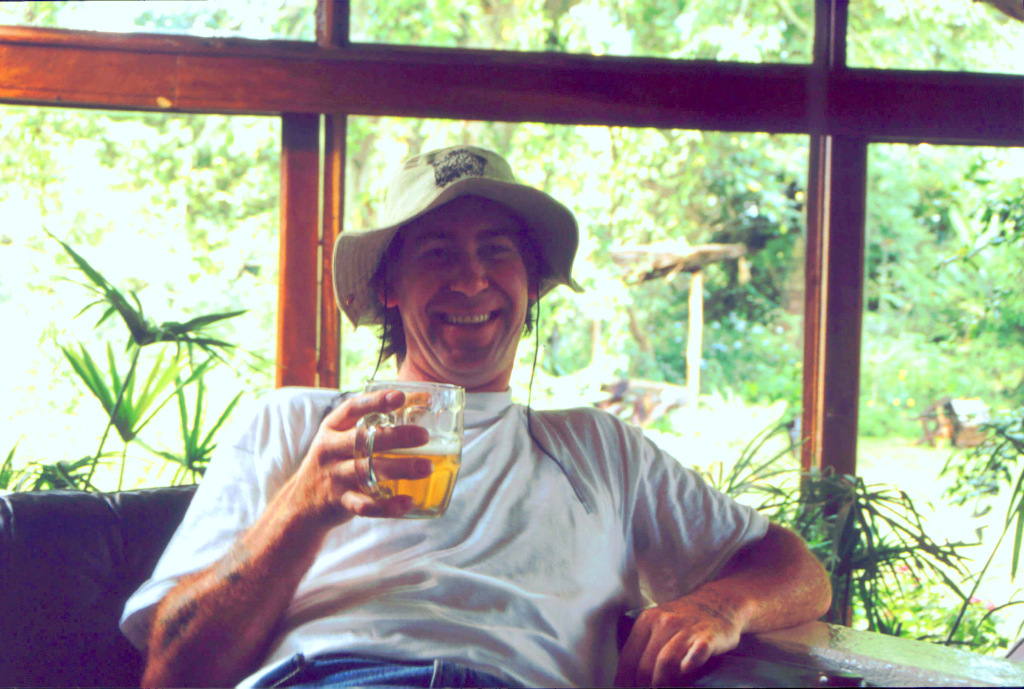
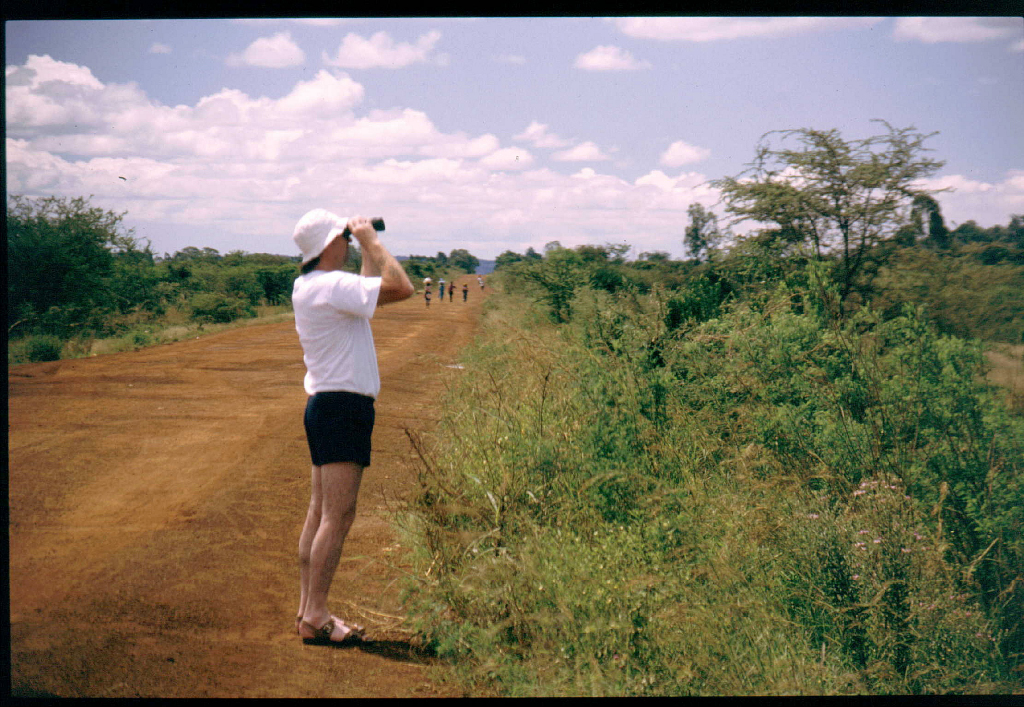
Mick Agnew – In Memoriam
On Wednesday 16th June 2021 Mick sadly passed away at Manchester Royal Infirmary. He had suffered a heart attack and was admitted to the hospital in May and was due to undergo surgery. Due to health complications the surgery never took place and he was admitted to intensive care on the 15th June following rapid deterioration in his condition.
A View from the Chair (special edition)
Mick was a true friend to me as well as a mentor and teacher when it came to killis (I can hear him now arguing it should be killies). His passion and commitment were second to none. When the future of the annual Convention was in jeopardy Mick stepped up to host the event at Buxton and quite rapidly improved the Convention finances, ensuring its continuity. He became Chair of the Association and started to make changes to benefit Members but his tenure was cut short due to ill health. Irrespective of that fact Mick continued to offer his support to the MC and remained intimately involved in setting up the Show each year.
More than that though Mick was fiercely defensive of the BKA and believed in making it accessible to all. He would be the first to greet a new face, share his knowledge freely and even give away young fish. He took pride in his fish and had a huge array of trophies, medals and certificates attesting to his ability as an aquarist. But he never let his knowledge and experience quench his thirst for knowledge.
Mick avidly researched his beloved Nothobranchius and he could converse with people at any level from beginning aquarist to published scientist. He was a critical thinker and could quite legitimately challenge scientists when they strayed from objective, evidence-based analysis. On one collecting trip to Africa he declared that that a particular catch was a new species. Over 20 years later he was proved correct when the species was finally named. Regrettably the author, fully cognisant of Mick’s find, chose not to recognise Mick’s contribution, a source of great frustration to Mick. Perhaps one day that oversight will be corrected and a new Nothobranchius species will be named in his honour.
A major contributor behind the initial success of Animal House at Batley and owner of his own thriving business, Tropics of Stockport, Mick played a part in raising standards in the ornamental aquatic trade. From importing Juwel aquaria before they became well known in the UK, to visiting wholesalers and breeders on the Continent to hand select quality fish. Breeding Discus? Not a problem to Mick who raised them by the score in tap water and of such a standard they could match those from top specialist breeders.
A man of many talents who served the membership well as Convention Organiser, Chair, Auctioneer and ever helpful colleague. He meant so much to so many. I will miss you my friend and your immortal phrase whenever confronted by arrogance, injustice or simple stupidity – ‘Bo**@?ks’. Rest In Peace.
Andy Patel (Chair)

My observations & methods for the maintenance and breeding of Nothobranchius – Mick Agnew
A-Z of Nothobranchius – Mick Agnew
Mick Agnew Killifish Conservation Fund
Myself and Ian Sainthouse thought you might like the following piece. Mick was never above a good laugh at his own expense.
COLLECTORS TALES
THE TRIBULATIONS OF A COLLECTING VIRGIN -XXX-
by Ian Sainthouse
A few years ago I penned a short series of articles under the heading “collectors tales”which were published in the BKA Killi News. There was one article largely about one person that I did not release but having now shown it to that personand obtained his permission, I have now released it for publication, but not in the UK as most BKA members will have already heard some of this and will easily identify the individual.
The person, who to preserve his anonymity I am referring to as Michael, had never been to Africa before and obviously was a collecting virgin. Although Michael has now been collecting more than once I am going to concentrate exclusively on what was his first visit to East Africa. Whilst collecting can be hard work, it can also have its lighter moments and Michael was involved in more than his fair share of these!
It all started on the first night in Africa. There were three of us and we were staying in a very pleasant British run hotel just outside Arusha in Tanzania. The accommodation was in twin bedded rondavals with en suite facilities and that first night I was sharing a rondaval with Michael. Having visited the bar we retired to the accompaniment of what sounded like a thousand Bullfrogs outside our window. During the night it was necessary for Michael to visit the bathroom which he did in the dark so as not to wake me, but soon I was awakened by the noise! Michael walked into the bathroom in bare feet. A big mistake! He crunched over the tiled floor until he found the light switch and could then see that the floor was alive with the biggest cockroaches he had ever seen.
The following day, on completing the first leg of our journey we had time to explore one of the smaller game parks at Manyara. We had just settled down for a look around the park with the windows down and the roof of the LandRover open when there was an ear-piercing scream from within. We were a few hundred yards from wildebeest and zebra but that scream put them to flight. The source of the scream, in case you haven’t already guessed,was Michael who admitted afterwards that he thought he had been bitten by a snake but in fact it was no more than a Tsetse fly. He had numerous subsequent encounters with the Tsetse flies who seemed particularly attracted to Michael–to the benefit of the others of us who avoided getting bitten for the duration of our stay in Africa. We could stand up looking through the open roof and the tsetse flies would fly past us just to get at Michael who had to sit inside the vehicle with a rolled up towel with which to defend himself. It should be said in defense of Michael that a Tsetse bite is extremely painful (so I’m told) but only lasts for a matter of seconds.
The next night was spent at Seronera in the centre of the Serengeti and Michael as usual had his 7 –8 bottles of beer–he claimed it was needed to replace the fluids lost during the day. Again I was sharing a room with Michael and was in bed before Michael arrived back from the bar. The rooms had high ceilings and decorative concrete walls. The headboard to the beds was a continuous plank of wood about 2 inches thick extending the full length of one wall. Michael had stripped to his rather ill-fitting underpants ready for bed when he saw a Gecko on the wall at high level and decided to get a photo. To reach high enough he stood on a chair placed on top of a table. Balancing on one leg (with difficultyafter 7 or so bottles!) he managed to take the photo almost descending to the floor in the process. Can you imagine the scene from where I was lying in bed? If there is sufficient demand I will try to find the photo.
So we went to sleep and it was not long before Michael was awake again –and woke me. This time, according to Michael there apparently was a giant rat wearing clogs running back and forth in the dark along the top of the headboard.
The following morning we set off in a westerly direction, target destination Lake Victoria. It was not long before we reached the Ikoma Gate on the western boundary of the Serengeti. Michael decided to make use of the toilet facility. This was a shed with a concrete slab in which there was a small hole with two pads in front on which to place feet. Soon after entering Michael re-emerged somewhat agitated having discovered a wasp nest-down in the hole!
There were no more incidents for the rest of the day. We stopped at five different places along the road to Musoma and on each occasion found fish. The first two were fry which remarkably survived the trip and grew on in aquaria to be two populations of what we identified as Nothobranchius neumanni . The next two localities contained populations of what is now generally known as Nothobranchius ‘Lake Victoria Species’. The final locality was at a point where the Tarime River crosses under the road. At the time of our visit the river was static. We found various permanent water fish including a lampeye with brick orange fins –Lacustricola bukobanus. This colour disappeared within a couple of days never to return. We also found a Nothobranchius species which,with some reservations,we referred to N. neumanni.
The next night was spent at the New Railway Hotel in Musoma, a large hotel on the edge of Lake Victoria with apparently few customers. Surprising there were only the three of us for dinner and the only item on the menu was Tilapia and chips. The three of us ordered this. Eventually the waiter arrived with two plates, one in each hand. Each contained a fillet consisting of one entireside of a large Tilapia. The waiter returned with the third plate for Michael and he was served up what was left –the head!
The journey from Musoma to Mwanza was almost uneventful, that is apart from the interest of the local people in this ‘Musungu’ wearing short shorts with exceptionally white long legs projecting beneath.
We spent a day on the south side of Lake Victoria and spent a considerable period searching a large area of inundated grassland. Here there were a number of cattle tracks through the grass where there was free water. These we used to walk along. It was whilst doing this that Michael had another problem. Suddenly and without warning Michael encountered a pothole in which his foot dropped and his wader then filled with water. He had to stagger back to the road like this as it was impossible to empty the wader whilst standing in the water!
The next leg of our journey was from Mwanza to Shinyanga and all was uneventful until breakfast in the Shinyanga Hotel where Michael asked for another cup of coffee. He was presented with a tin of instant coffee and a jug of hot water. No problem here except that when the water was poured from the jug for his third cup he noticed that the water he had been using to make his coffee looked extremely suspect. That day at Michael’s request our driver had to avoid all bumps on the road back to Mwanza and he consumed Diacalm tablets like they were Smarties!
On the outward journey we had found a population of the Lake Victoria Species near Runere which was close to the site where John Rosenstock had previously found this same fish, and of the return journey a population of the N. taeniopygus that has no banding in the caudal fin.
On the return journey to Musoma we stopped at Bujora and collected some fry and also in the same water found adult fish. An attractive Nothobranchius with abright red band on the anal fin, red ventral and pectoral fins.
There was very little happening on the second half of the tripback to Arusha apart from another attack of the Tsetse (only on Michael of course) whilst we relaxed on a game drive in the reserve at Tarangere before continuing the following day back to Arusha.
It was in the Arusha hotel owned by the British couple that the bar served bottled beer and this time together with pint glasses. For the first time Michael found out that the bottles of which he drank 7 or 8 each night were half a litre each and not half a pint!
Our departure from Arusha was uneventful but all was not over yet for Michael.We had had a successful collecting trip in which we had found a number of populations of what we provisionally assigned to N. neumanni and N. taeniopygus together with N. sp. Victoria types and N. sp. Bujora. Michael had a problem when we arrived at London Heathrow airport. His case arrived safely but not the box of fish he had spent the last two weeks collecting. It was never seen again.