Eurasian killifish

Region that contains 9 Genera
- Anatolichthys
- Anatolichthys anatoliae
- Anatolichthys danfordii
- Anatolichthys fontinalis
- Anatolichthys iconii
- Anatolichthys irregularis
- Anatolichthys maendricus
- Anatolichthys meridionalis
- Anatolichthys salidae
- Anatolichthys splendens
- Anatolichthys sureyanus
- Anatolichthys transgrediens
- Anatolichthys villwocki
- Aphaniops
- Aphaniops dispar
- Aphaniops furcatus
- Aphaniops ginaonis
- Aphaniops kruppi
- Aphaniops richardsoni
- Aphaniops sirhani
- Aphaniops stiassnyae
- Aphaniops stoliczkanus
- Aphaniops teimorii
- Aphanius
- Aphanius almiriensis
- Aphanius fasciatus
- Apricaphanius
- Apricaphanius baeticus
- Apricaphanius iberus
- Apricaphanius saourensis
- Esmaeilius
- Esmaeilius darabensis
- Esmaeilius isfahanensis
- Esmaeilius persicus
- Esmaeilius shirini
- Esmaeilius sophiae
- Esmaeilius vladykovi
- Kosswigichthys
- Kosswigichthys asquamatus
- Paraphanius
- Paraphanius alexandri
- Paraphanius boulengeri
- Paraphanius mento
- Paraphanius mentoides
- Paraphanius orontis
- Paraphanius similis
- Paraphanius striptus
- Tellia
- Tellia apoda
- Valencia
The species in this regional group can be found around the Mediterranean from Spain in southern Europe west to Israel and back east from north Africa as far as Algeria. They are also found in the Middle East as far as the westernmost corner of India. They can be split into two types: The Aphanius-type which is now divided into eight genera and all of which have relatively short, deep bodies; and the Valencia genus which contains three species, all with longer pike-like bodies. If maintained correctly, they can live up to seven years, the larger species reaching 10 cm in length.
Maintenance
The majority of Eurasian killifish require fairly similar conditions: The water should be hard with a pH of 7.5 – 8, which can be achieved using bicarbonate of soda at a third of a teaspoon per gallon and marine salt at one and a half teaspoons per gallon (with some exceptions that require more). A piece of tufa rock will also help to maintain the hardness (a fist-sized piece will suffice in a 10 gallon container). The aquaria should be furnished with filamentous algae and fine leaved plants (acrylic mops can also be added, though the fish tend to spawn in the algae given the choice). As these are seasonal fish, they should be kept in unheated aquaria allowed to drop to lower temperatures during the winter (down to 10°C or lower) so that they are triggered to spawn when the temperature rises in the spring and summer. Plenty of natural sunlight is also beneficial and helps keep the algae in full bloom.
Eggs are fairly easy to find, particularly by touch, running the algae through your fingers under water. They hatch in around 14-21 days and can eat newly hatched brine shrimp and powdered dried food straight away, though the algae also provides minute organisms for them to feed on. If the aquarium has heavy algae and plant growth, it is possible for the fry to grow on with their parents in some cases, though it may be advisable to remove fry and eggs for safety and place them in separate rearing containers (floating these in the adults’ aquarium is the best option).
Instructions for keeping and breeding Cyprinodon (also a useful guide for Aphanius species)
Some of the more popular species
Aphanius fasciatus – found extensively around the Mediterranean clockwise from Corsica and Italy to Tunisia (some populations may be redesignated under new genera). Most populations live in coastal lagoons and require a high salt content in their water (five teaspoons per gallon).
Anatolichthys danfordii – found in only one location in central Turkey. This is one of the few species which doesn’t require salt and prefers neutral water at pH 7.
Anatolichthys anatoliae – found in the surroundings of the Great Salt Lake, Tuz Golu, and other neighbouring lakes; Menderes and Upper Sakaraya Rivers.
Apricaphanius iberus – found in southern Spain in coastal rivers and wetlands.
 Apricaphanius iberus ‘Peniscola’

Apricaphanius baeticus ‘Cabezas de San Juan’
Paraphanius similis – found in southern Turkey in coastal rivers and wetlands.
Paraphanius mento – It is found in Anatolia (Turkey), Syria and Palestine. They are peaceful amongst themselves and with other fishes, thus making them an ideal aquarium fish for the community tank with other fishes of their own size.
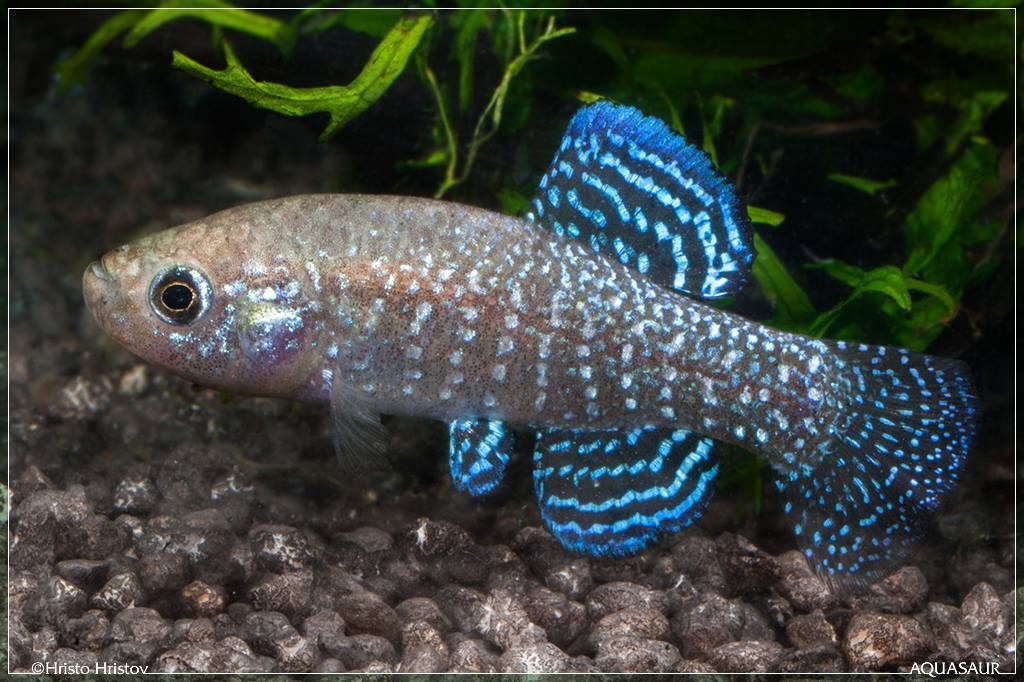
Esmaeileus vladykovi – found only in a couple of highland valley wetland locations in southwest Iran.
Aphaniops dispar – found in a number of locations around the Red Sea.

Valencia letourneuxi – found in a few locations in northwest Greece, including Corfu, and southwest Albania.
References
Instructions for keeping and breeding Cyprinodon (also a useful guide for Aphanius species)
An overview of the genus Valencia Killi-News 614 May-Jun 2023 Jim Warner
The new genera of the restructured Aphanius genus Killi-News 599 Nov-Dec 2020 Jim Warner