Fruit flies
Introduction
You can culture both vestigial-winged Drosophila melanogaster and flightless Drosohila hydei. Drosophila hydei are approximately 2-3 times meatier than the diminutive Drosophila melanogaster.
Feeding adult fruit flies
Whilst killifish look extremely healthy on a diet of adult fruit flies and really love to eat them. For some reason they produce less/no eggs when fed on this diet. Feeding white worms on the other hand seems to induce killifish to lay eggs.
Feeding maggots
Perhaps the solution to this no-egg production maybe to feed fruit fly maggots instead. In this early article the authors feed and harvest fruit fly maggots:
http://www.nativefishlab.net/library/textpdf/14269.pdf
It makes a lot of sense to feed maggots. Maggots should in theory be more nutritious and fattier than adults. At this stage the fly is much less differentiated. When feeding adult fruit flies you will often find undigested chitin-rich limbs/heads and wings in the bottom of the tank. Energy harvested by the maggot is used later in life, to create the pupal cast, for metamorphosis and for adult life. Therefore feeding at an earlier stage in the life cycle should provide benefits. There is a lot of current interest in black soldier fly culture as a source of cheap protein. It is interesting to note that this protein is harvested from the larvae and not from the adult fly.
Method
- I use insect habitat jars from a company called http://bugzarre.co.uk . These come with a fine mesh lid that is fine enough to contain D.melanogaster. Sweet jars of a similar size could easily be used instead.
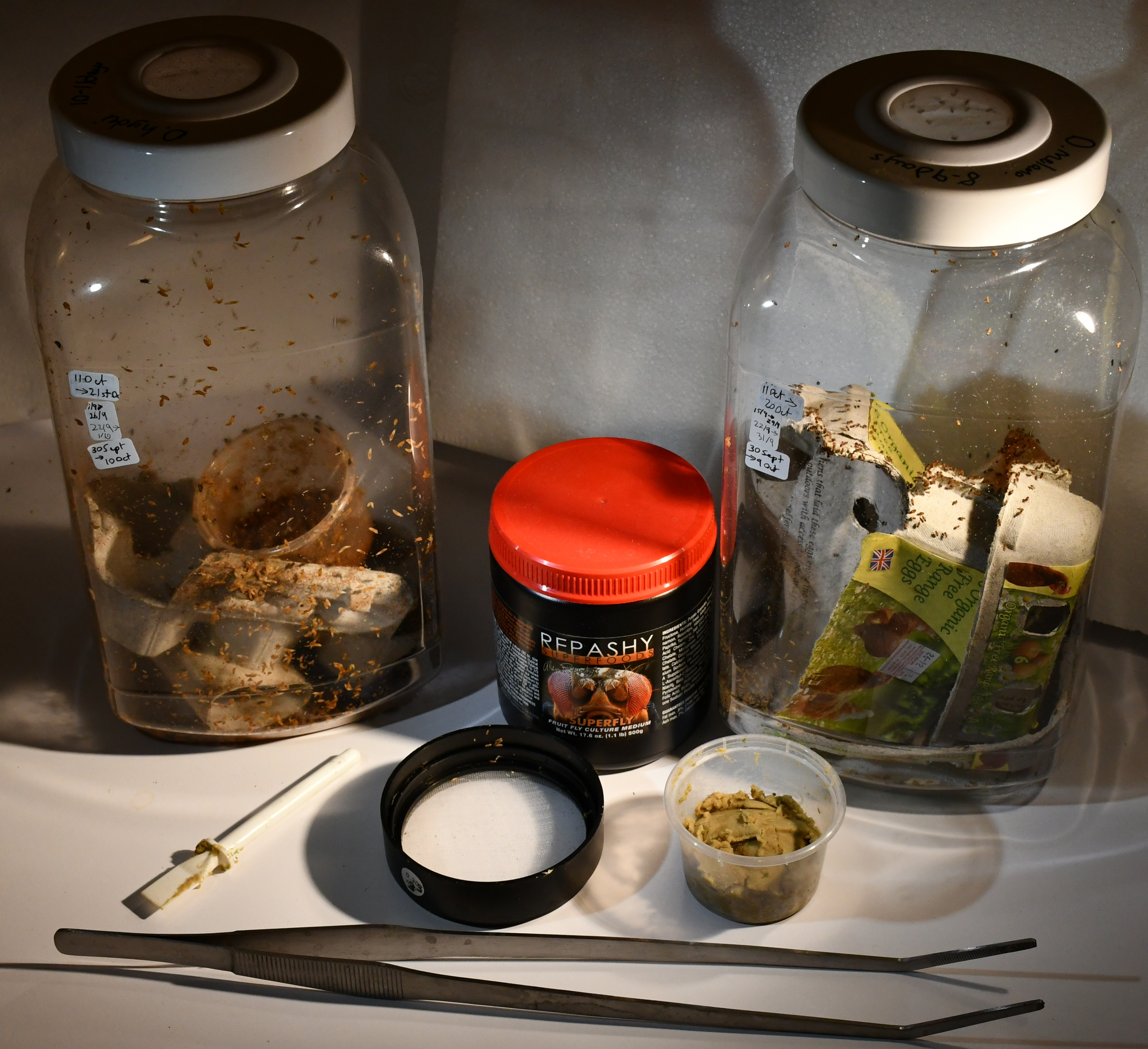
- add some cardboard egg cartons to the jar to provide a surface for the adult flies.
- Every 2-5 days I add a dated pot of repashy superfly culture medium.
- In theory it takes 8-9 days for D.melanogaster and 10-11 days fro D.hydei to develop to the pre-pupal stage. This can be quite variable though depending on the temperature, so it is best to keep an eye on them. Look for larvae migrating from the food looking for a site to pupate.
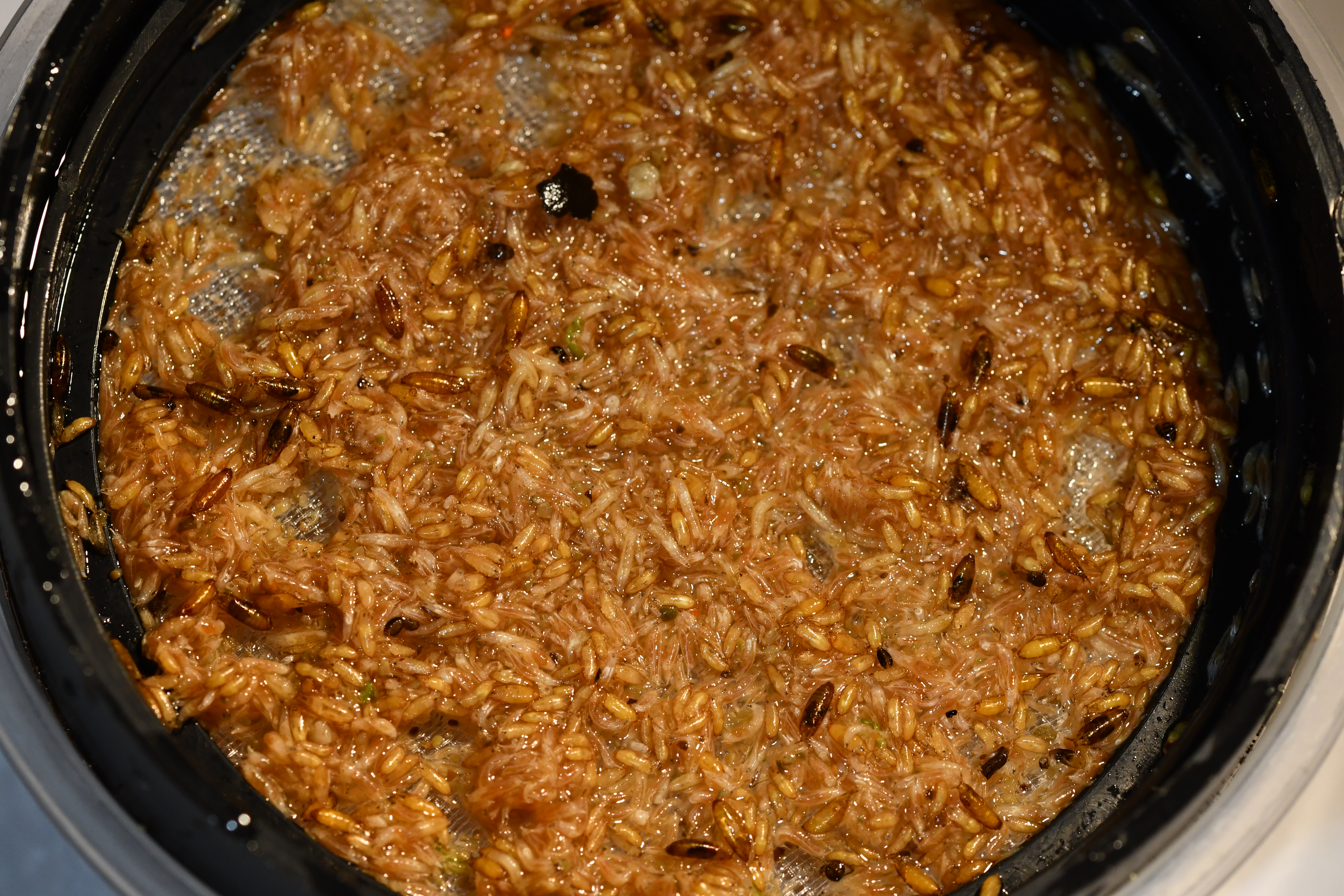
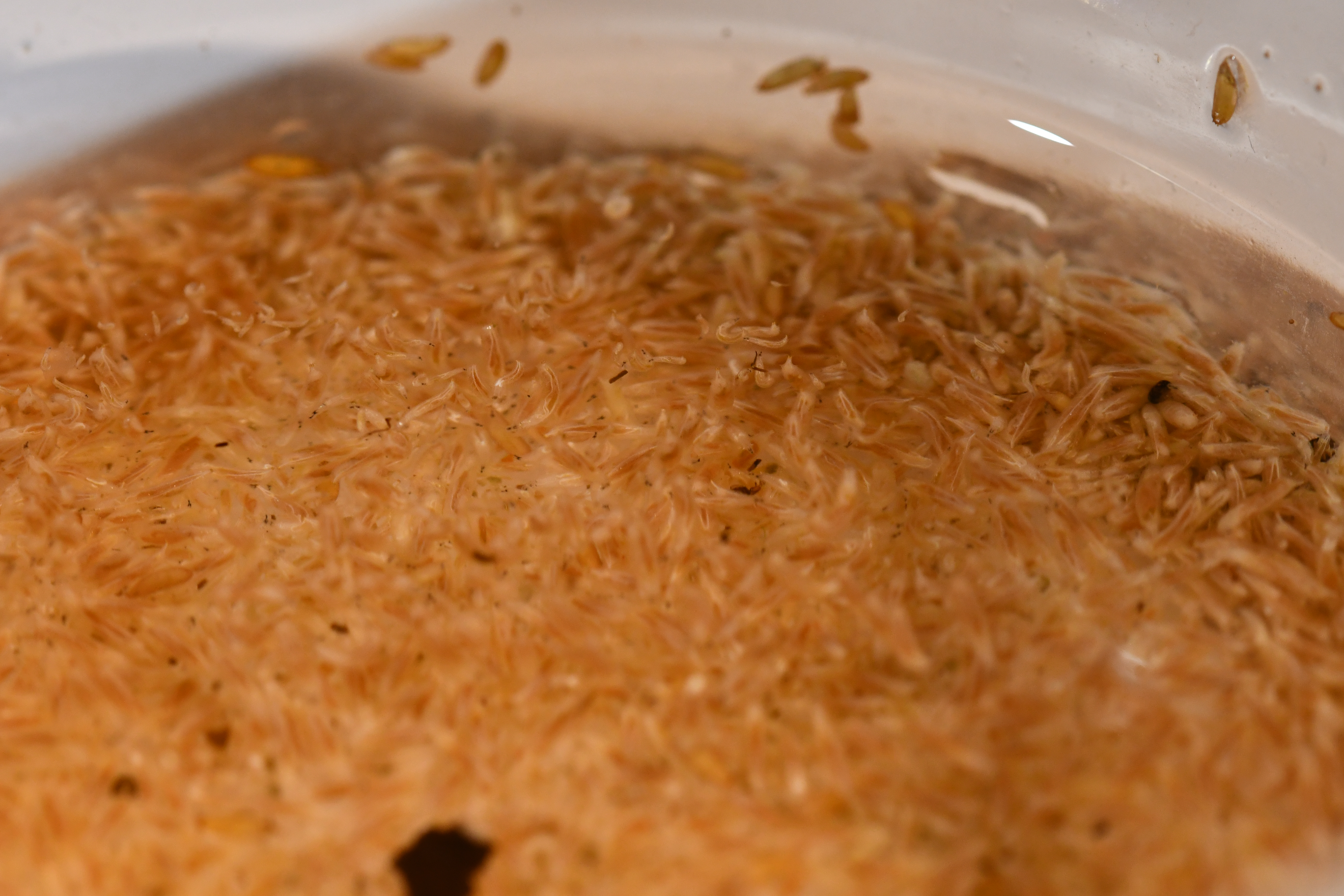
- To harvest I use large tweezers to remove the dish. I then rinse the larvae/medium mix through a 0.30 mm mesh (JBL Artemio Sieve) under a tap. I have found harvesting D.melanogaster is quite tricky so I now just culture the larger D.hydei larvae.
Notes
Culturing fruit fly in this manner can produce a more constant source of food than when feeding adults, which tend to all hatch at once. This method is also quite economical with the culture medium. The larvae whilst initially viewed with some skepticism by my fish are now taken eagerly. Another advantage of feeding the larvae is there is much less opportunity for escape. The only downside to feeding larvae is that the larvae don’t live long in water. They also don’t move too much so can be missed by the fish. Care therefore needs to be taken not to over feed. I don’t think I would feed Drosophila larvae exclusively but as an addition to feeding white worms it might help to provide a varied diet. Feeding fruit fly larvae may also be a good alternative to feeding white worms through hotter summer months or if living in warmer climates where white worm culture maybe more difficult.
Laboratory Technique
The method described in this video, maybe a good option. Creating separate bottles I per day maybe a good way to go. Harvesting the larvae by adding a sugar solution to the medium and allowing the larvae to float to the top seems a very clean way of harvesting the fruit fly.
Larvae Collection
-
Set up an 8 ounce bottle of flies (10-15 males + 10-15 females).
-
Let flies lay eggs for 24 hours, then clear bottle of flies. (Transfer the adults into a new bottle and repeat as necessary).
-
Incubate bottle for 3-4 days, or until third instar larvae are visible.
-
Add 50 – 100 ml of 20% sucrose to the bottle with larvae and let sit for 20 minutes. Larvae will float to the top.
-
Collect larvae using a 25 ml serological pipette with the tip cut off, and place into a mesh basket.
-
Wash larvae in the mesh basket two times with deionized H2O. Larvae are now ready for the experiments.