Skip to content
British Killifish Association
  • Events
  • Join/Renew
    • Join/Renew
    • membermojo
  • Buy Killifish
    • Buy Killifish
    • Auction rules
  • W.Africa Killifish
    • W.Africa Killifish
    • Killifish
    • Nothobranchius A-Z
    • Eurasian Killifish
  • Killi-News
    • Killi-News
    • BKA Publications
    • Killi-News Archive search
  • Mick Agnew Fund
  • Species Maintenance
    • Species Maintenance
  • Killi-Data
    • Killi-Data
    • killi-data.org
  • Links
  • Learning
    • Beginners guide
    • Beginning with killies
    • BKA Guide to Killie Keeping
    • Chromaphyosemion History, Maintenance and Breeding
    • Nothobranchius Maintenance and Breeding
    • South American Annual Killifish Maintenance and Breeding
    • Cyprinodon (and Aphanius) Maintenance and Breeding
  • About
    • About
    • History
    • MC Agenda
  • Search Icon
Cynodonicthys tenius

Cynodonicthys tenius

 CYNODONICHTHYS TENUIS

 Originally published as: “Rivulus tenuis” B.K.A. Information Pamphlet No.98 February 1975

Biotope: The coastal lowlands of Veracruz southward to the Republic of Guatemala in Central America.

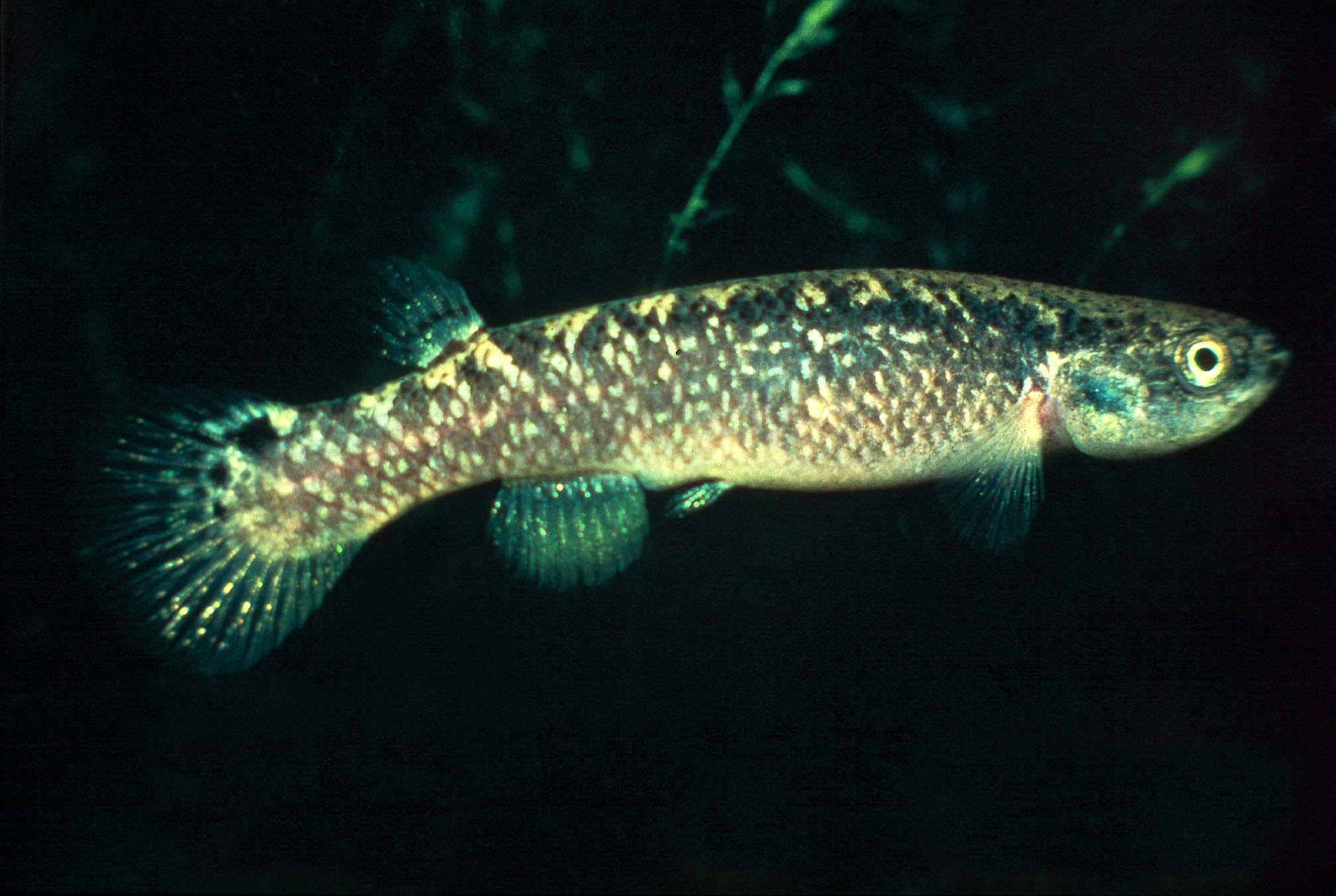
Description of male: Tan to brown dorsally and along the sides. The underside is yellow to pale orange and the rear half of the body has a blueish sheen. Caudal fin brown outlined top and bottom with a band of yellow to sky blue, dependent on lighting, and is sub – margined in deep purple. Anal pale green, dorsal green with a yellow tip. Ventrals are yellow to orange, pectorals clear, and the eye is amber with a gold iris.

Size of male: To 2.5 inches.

Description of female: The body is tan and lacks the blueish sheen of the male and the underside is cream coloured. Caudal fin tan and unmarked, anal amber to pale green, ventrals cream. Dorsal faint green with a few black dots along the base, pectorals clear. A conspicuous Rivulus spot’ at base of tail.

Size of female: To 2.5 inches.

Maintenance and breeding: Quite easy to keep and breed, as are most of the genus. Soft water with one teaspoonful of salt for each gallon and a pH between 6.2 and 7.4 is quite suitable. While this species will withstand cooler waters, temperatures in the mid to high seventies are preferred. Can be bred using floating mops or plants such as Riccia and collecting of eggs can be practised if one desires. However, giving a pair or trio a suitably sized tank, with a heavy cover of floating plants, they will produce results that are quite satisfactory. The adults seemingly ignore the fry and the young can be raised in the same tank with the parents. Eggs hatch in 12 to 21 days at temperatures in the mid-seventies. The fry are large and can manage micro worms and newly hatched brine shrimp immediately. A good dried food of the proper size should also be included in the diet. Grindal worms should be offered in four to five days and progressively larger foods thereafter. The young grow rapidly, are over an inch long in four to five weeks, and sexes can be determined at this time. They reach a length of about 2 inches and are sexually mature at five months of age, full size being attained in seven to eight months.

Summary: An attractive and interesting little species. Quite hardy under the proper conditions and not given to aggressiveness. Will eagerly accept dried as well as live foods and can be kept in company with other related species of the same size and temperament.

References:

Cynodonichthys tenius Papaloapan


Cynodonichthys tenius (female)
Cynodonichthys tenius


Login Status

Forgot? 

Articles

  • Tim Addis’s Killifish of West Africa
  • Killi-News Archive
  • History of the BKA
  • Eurasian killifish
  • Maintenance and breeding of Cyprinodons (and Aphanius)
  • Maintenance and breeding of Nothobranchius
  • Breeding & maintenance of S.American annual Killifish
  • BKA Guide to Killie Keeping
  • The Aphyosemion subgenus Chromaphyosemion
  • First observations on the reproduction in captivity of Profundulus adani KN 625 Mar/Apr 2025
  • Uganda ’88 – Ian Sainthouse KilliNews 281-285 1989
  • Aphyosemion wachtersi and Aphyosemion buytaerti by Christian Cauvet KilliNews 585 Jul/Aug 2018
  • Paludopanchax: Charming annuals from the Gulf of Guinea countries KN 588 2019
  • Brazil 2017 by J.W.Hoetmer KilliNews Issue 591 Jul/Aug 2019
  • Return to Leticia KN 594 2020
  • COCCA 2019 by Christian Cauvet KilliNews 596 May/Jun 2020
  • A killifish adrift in the Indian Ocean by Jérôme Blanc KilliNews 610 Sept/Oct 2022
  • BKA Video Library

Live Foods

  • Infusoria
  • Microworms
  • Vinegar Eel Culture
  • Baby Brine Shrimp
  • Moina
  • Grindal worms
  • White worms
  • Fruit flies

Techniques

  • Posting Killifish
  • Beginning with Killies
  • Equipment list

Gallery

  • All
  • Aphanius and Valencia
  • Aphyoplatys
  • Aphyosemion
  • Aplocheilus
  • Archiaphyosemion
  • Austrolebias group
  • Callopanchax
  • Campellolebias
  • Chromaphyosemion
  • Cyprinodon
  • Epiplatys
  • Fundulopanchax
  • Fundulus
  • Fundulosoma
  • Gnatholebias
  • Jordanella
  • Leptopanchax
  • Lucania
  • Maratecoara
  • Micropanchax
  • Neofundulus
  • Nimbapanchax
  • Nothobranchius
  • Scriptaphyosemion
  • Simpsonichthys group
  • Pachypanchax
  • Pitunia
  • Platypanchax
  • Plesiolebias
  • Procatopus
  • Pseudepiplatys
  • Pterolebias
  • Renova
  • Rivulus group
  • Terranotus
© 2026   Copyright. British Killifish Association All Rights Reserved.