Chromaphyosemion bitaeniatum
CHROMAPHYOSEMION BITAENIATUM (Ahl 1924)
Originally published as: B.K.A. Information Pamphlet No. 112 May 1977
Habitat: East Nigeria, Togo through to Cameroon
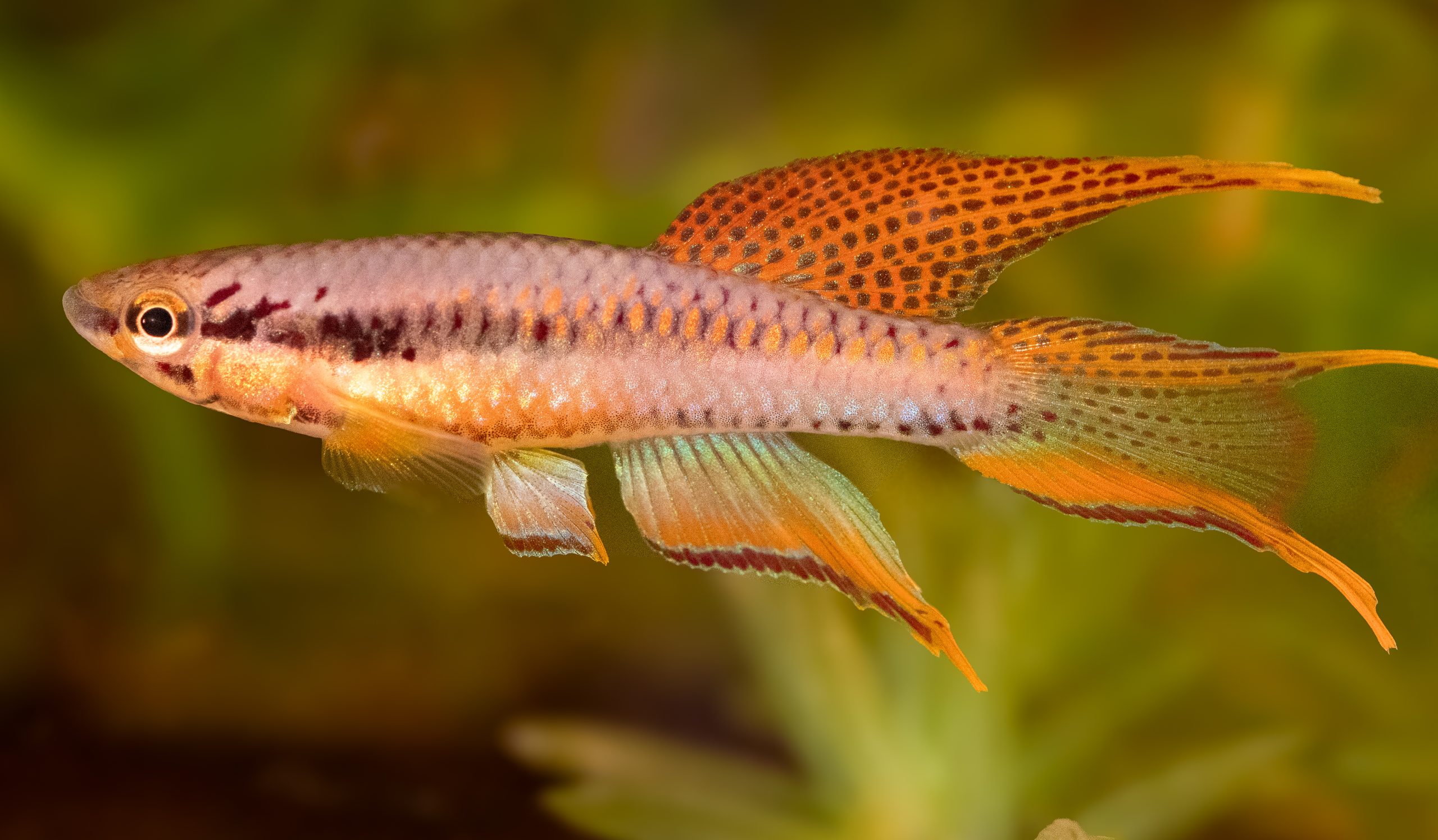
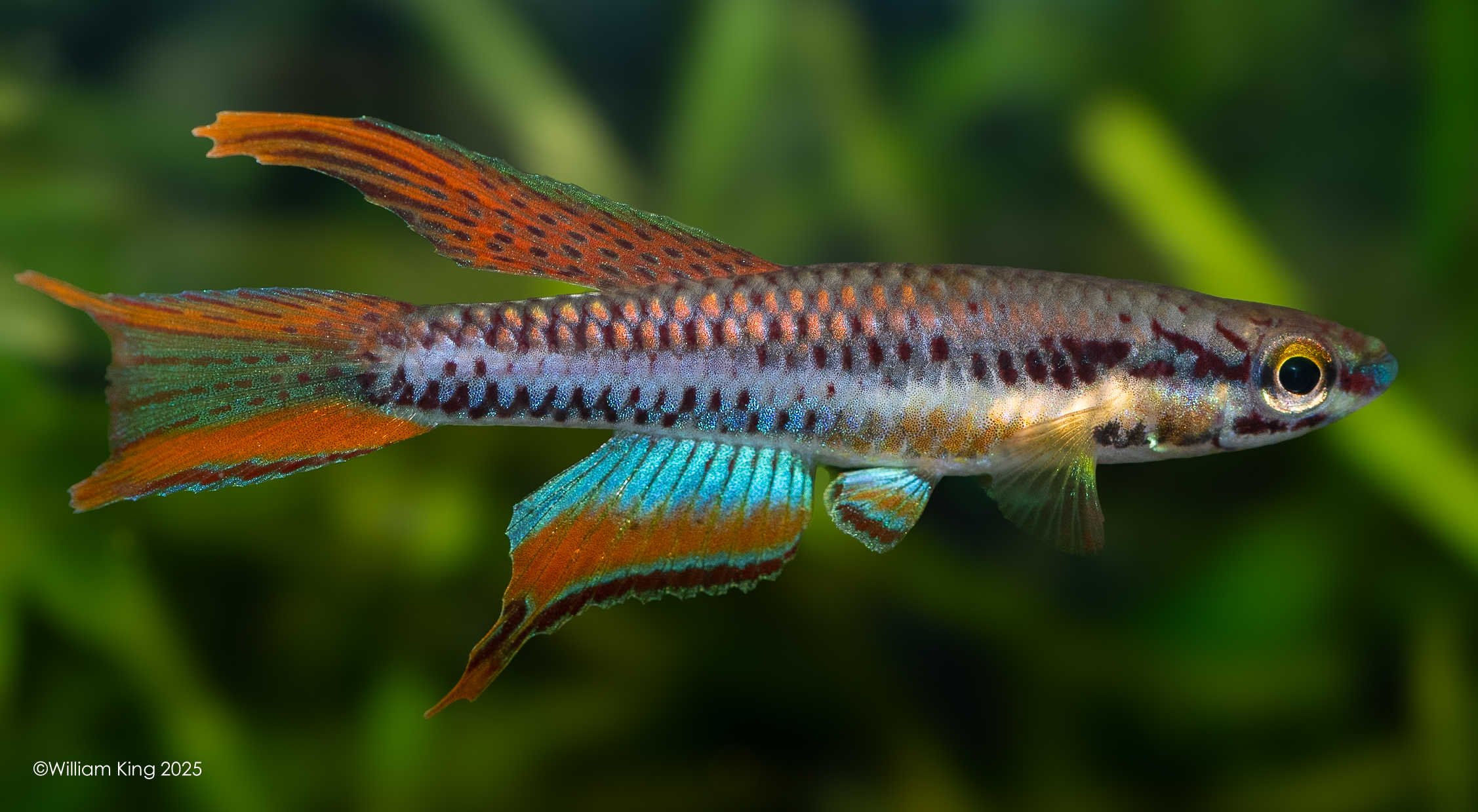
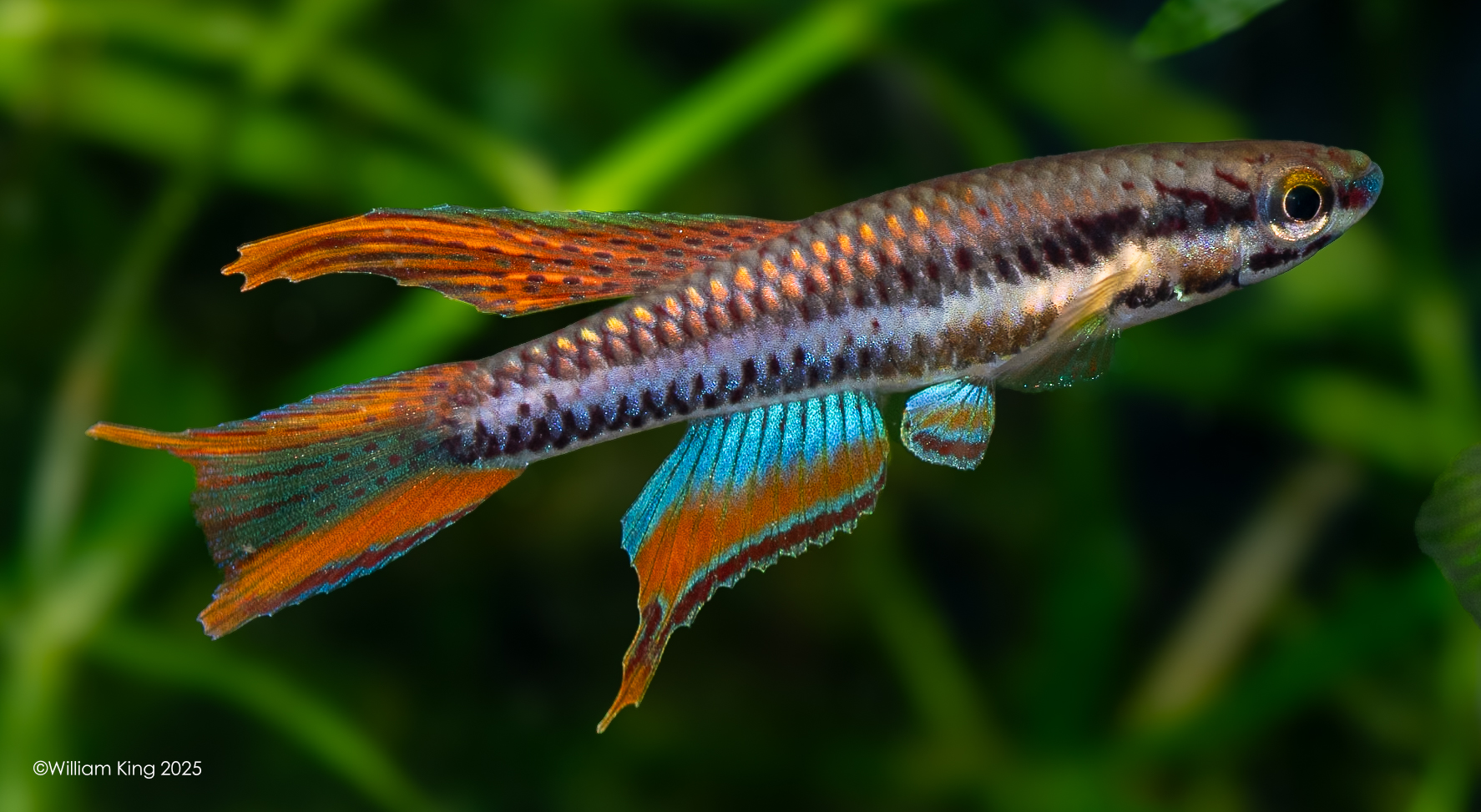
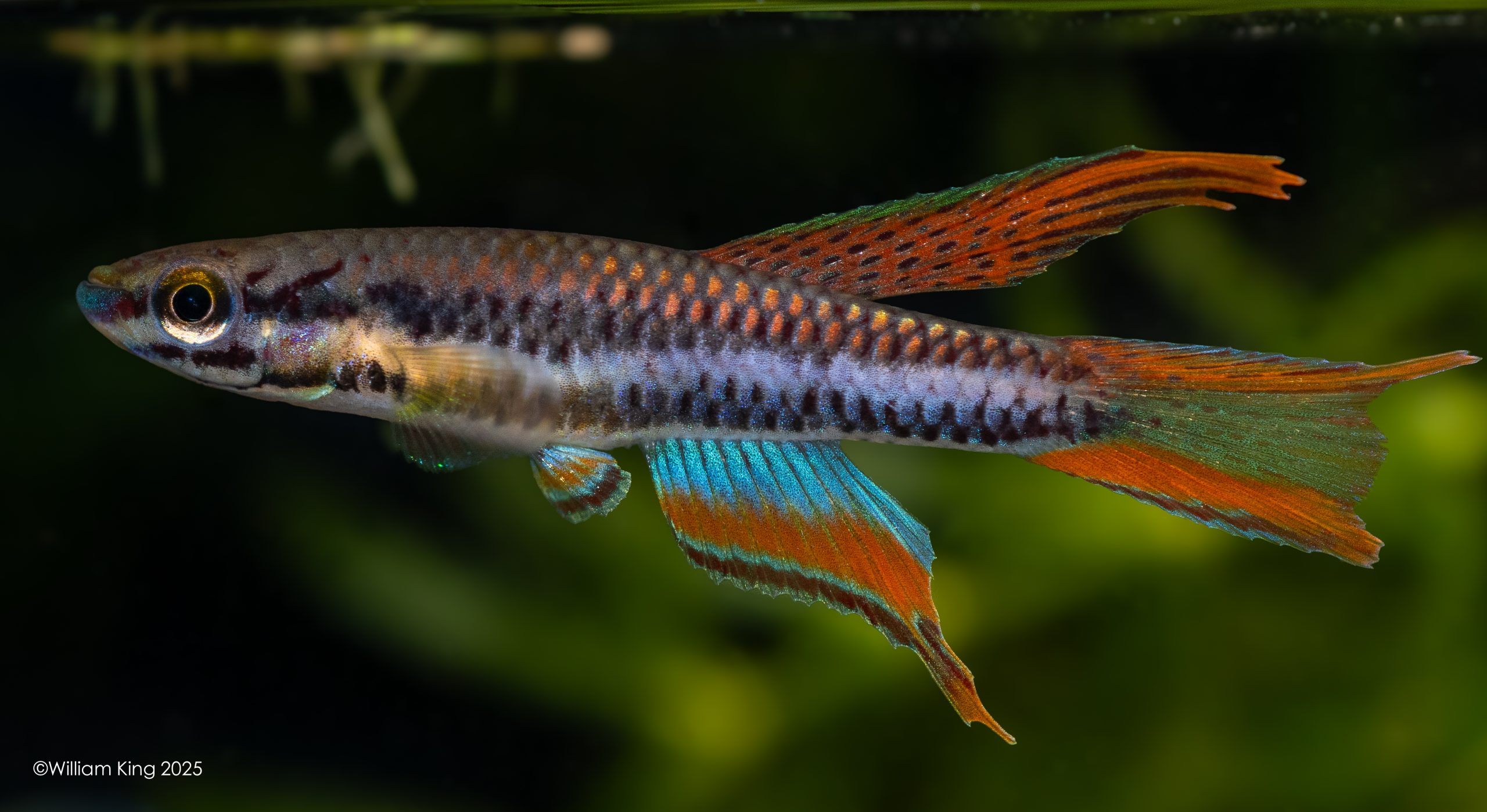
Description of the male: The basic colour of the body is dark brown with two black horizontal bars. The scales above the upper bar have a gold-like reflection whilst at the end of the body the scales between the bars have a light blue reflection.
The pectorals are orange with light blue edging and a dark red line. The dorsal is basically orange with the front upper part dark green. The whole fin has many dark brown spots and lines going in the direction of the fin, which extends into a long streamer.
The anal fin is orange but against the body is more whiteish. The fin is edged light blue with a dark red line through it and again extends into a long streamer. The caudal fin is transparent. The upper and lower parts again form streamers which are orange coloured. The lower part has a light blue edge with a dark red horizontal line running through. The outer edge of the upper part is light blue. Throughout the whole fin there are orange/dark brown spots. The rest of the fin is orange with a lot of dark brown lines going in the direction of the fin. The middle part of the caudal is about 1/2 the size of the streamers.
Size attained 40mm.
Description of the female: The body is greyish brown with two black horizontal bars. The caudal fin is transparent with a lot of dark-red spots. All other fins are transparent.
Size attained 30mm.
Requirements: This species accepts all water conditions with a pH from 6-8 and a DH German of 0-25 but prefers a pH from 6.6-6.8 and a DH German from about 5. It has been kept on spawning at all temperatures, and none of them became ill or died. Nevertheless, it is not advisable to keep fish at these temperatures. Anything between 20-30C. (69-87F.) is best. It is really an attractive strain to keep in show tanks as the fish behave like butterflies under the above-mentioned conditions with enough plants and a quite tank. Feeding them does not give any problems at all as they accept everything as long as it is not too big.
Breeding: This is extremely simple. The tank can be small. The male is not aggressive at all. On the bottom they prefer peat with several floating plants. Mops can also be used but peat fibre floating on the plans is better. The fish will spawn about 70% of the eggs in this, while the rest go into the plants. The parents are not aggressive to their fry which can be left with them. Older fish may tend to spawn in the peat on the bottom and then it is simply impossible to collect a reasonable number of eggs. The number of eggs varies a lot, but the average makes it possible to keep this strain in continuous breeding. The advantage then is, that the water hardly ever must be changed as the older it is the more they like it. Eggs left in the water hatch after 14-26 days. Dry storage is possible but not very advisable as the eggs develop very quickly. About 60% of the eggs hatch into healthy fry with this method.
Fry accept newly hatched brine shrimp at once and grow reasonably quick in the beginning. Later on this slows down. They are sexable after about 3-4 months. Maturity is reached after 8-12 months.
Summary: A very beautiful species which is also very easy to maintain and breed. It should be in every killi show tank. It is a very good beginners fish.


References: