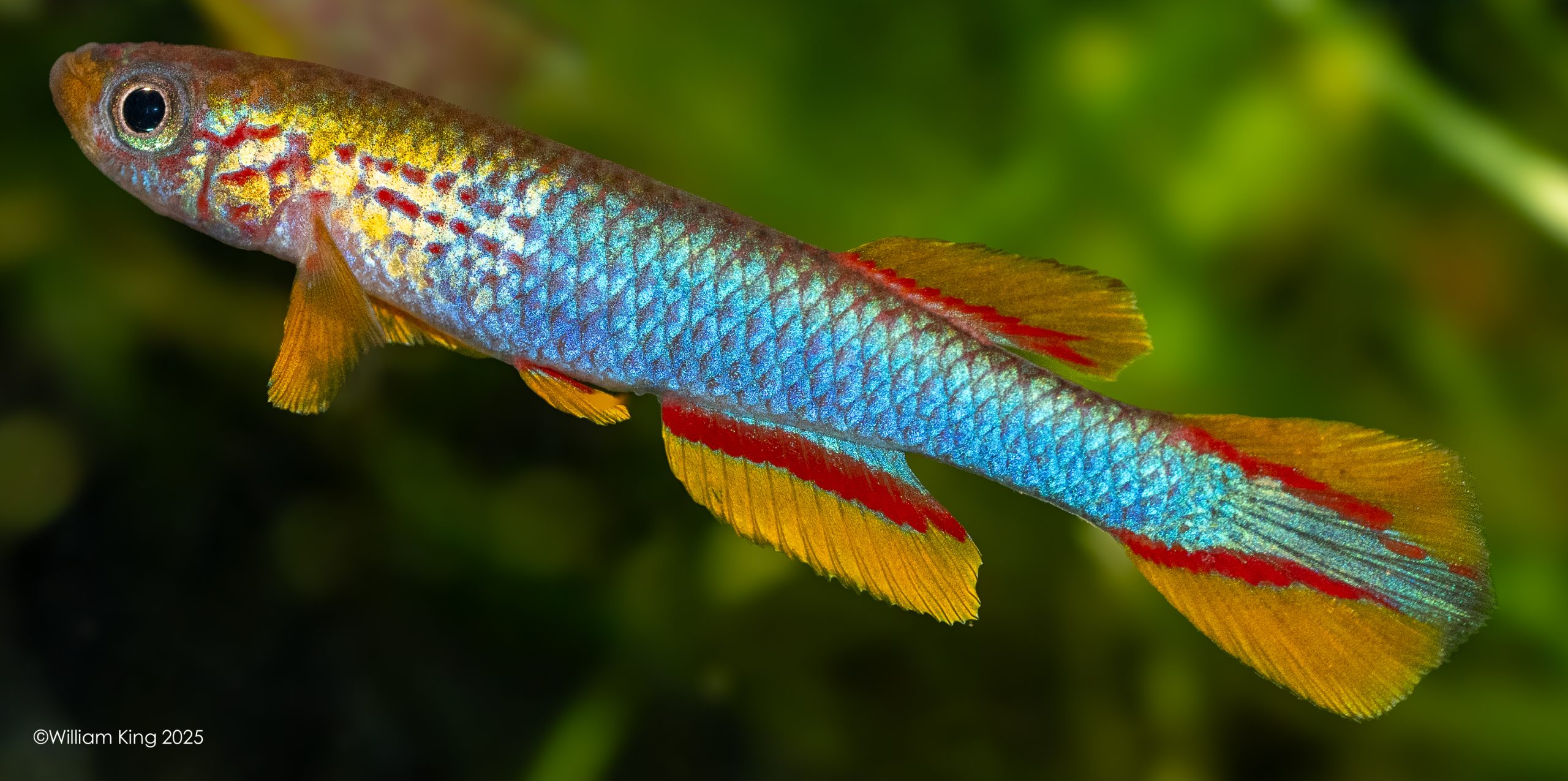
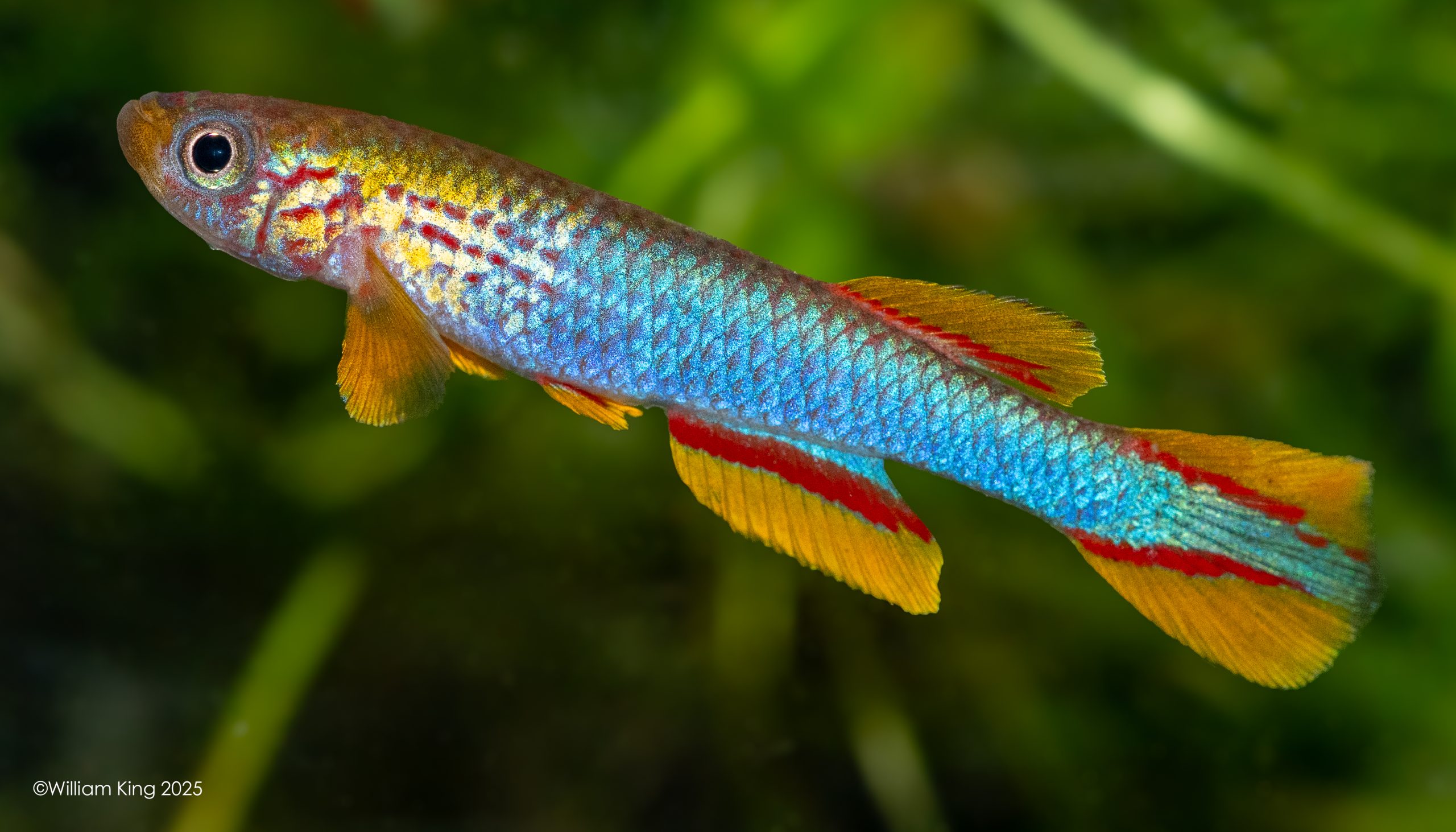
Aphyosemion coeleste
APHYOSEMION COELESTE (Huber & Radda 1977 )

Originally published as: B.K.A. Information Pamphlet No.125 1985
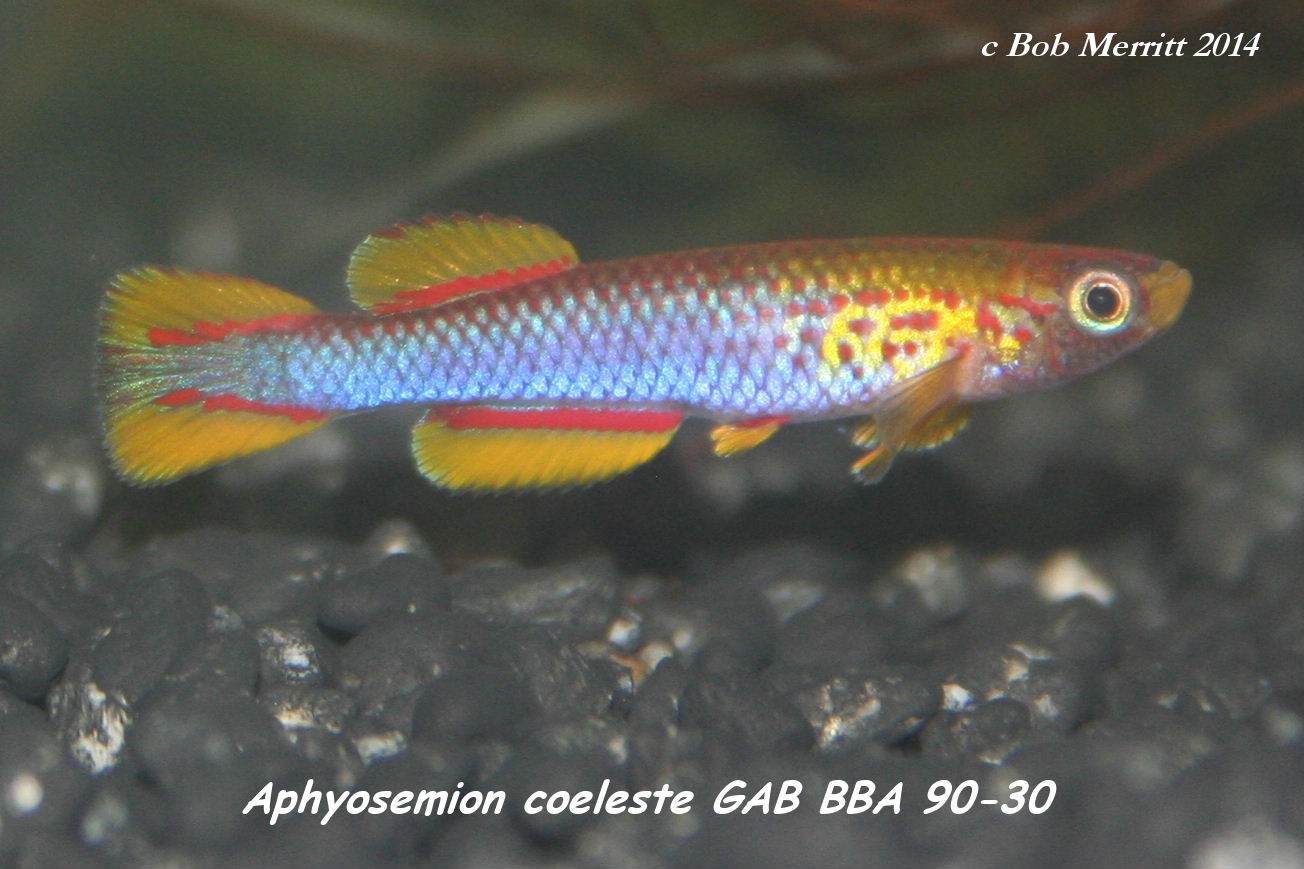
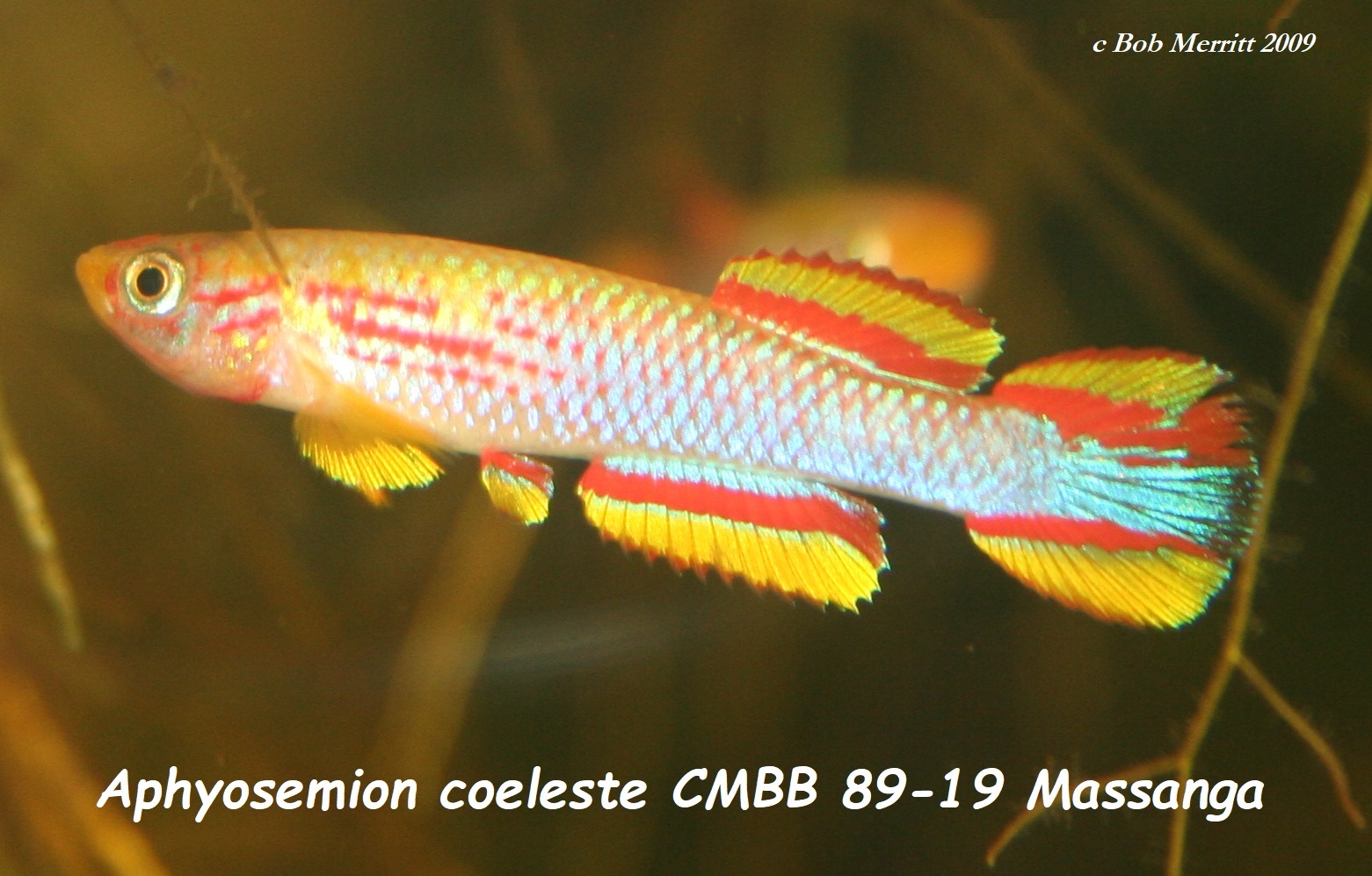
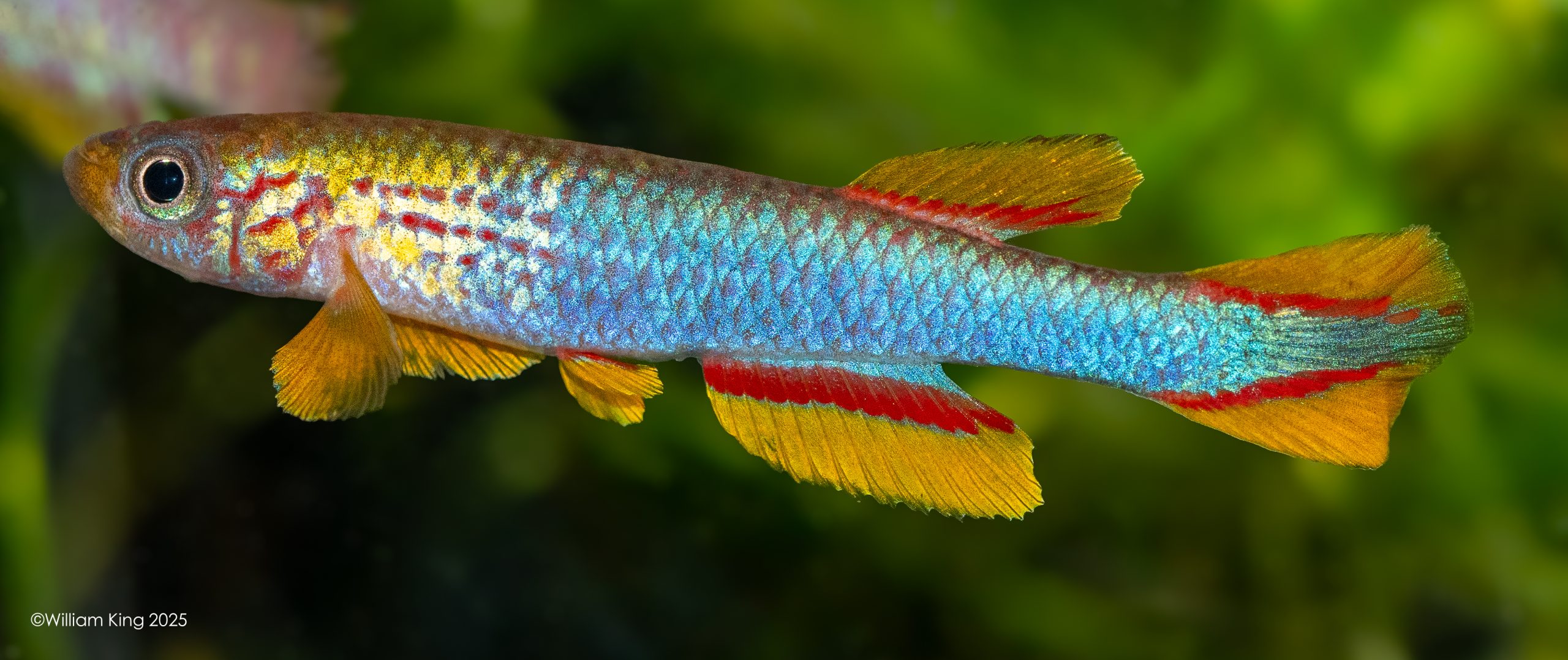
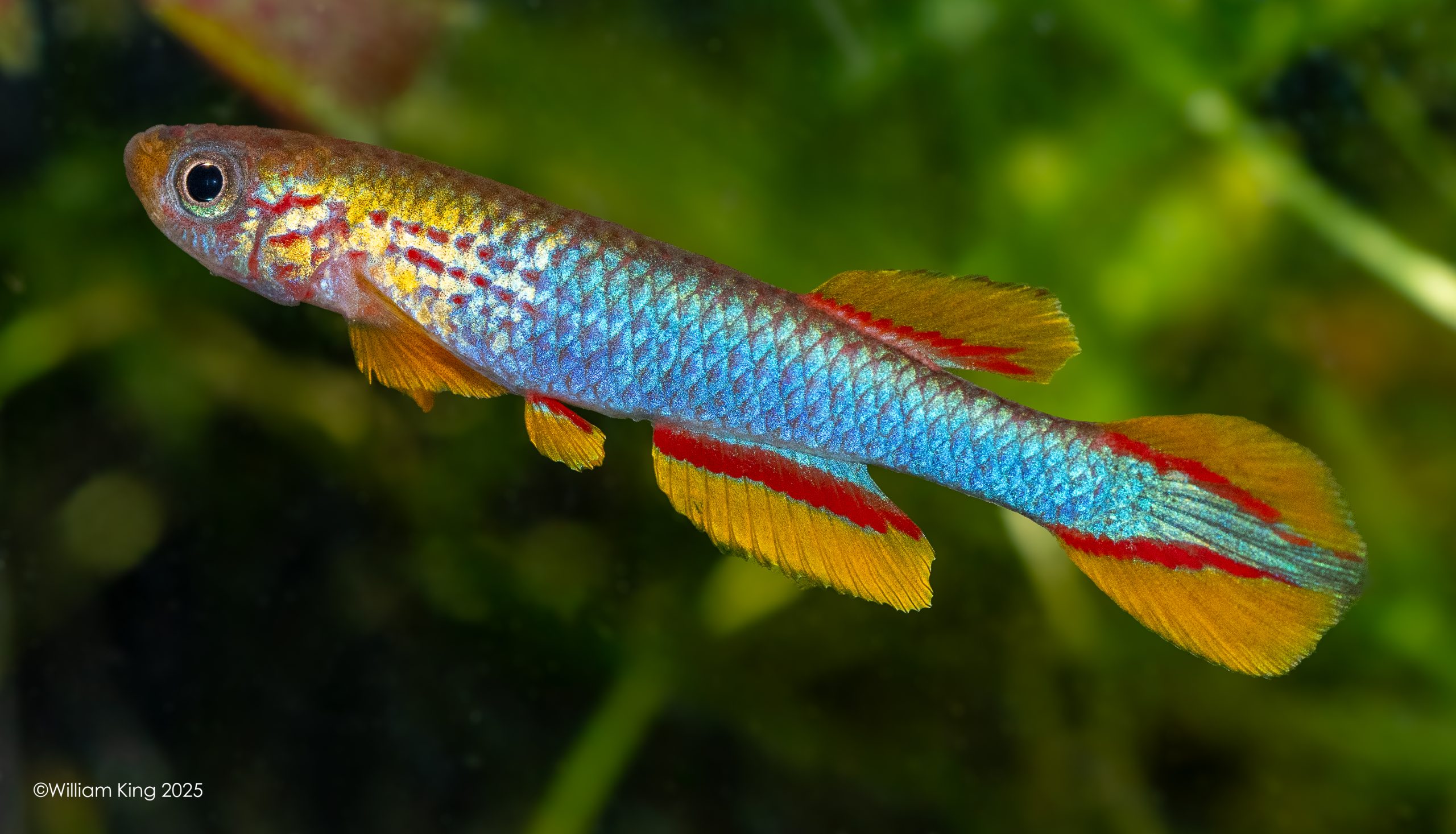
Meaning of name: Sky (sky blue colouration of flanks)
First description: Cyprinodontiden Studien in Gabon IV Das Du Chaillu +Massiv – Aquaria 24 : 99-110.
Size: 5cm.
Meristics: D=11, A=15, D/A 7.
Karyotype: n=16 (Moanda population, Huber 1980).
Systematics: This species is part of a hard to define group of fish. There are 2 other species – A.citrinepinnis Huber & Radda 1977 and A.ocellatum Huber & Radda 1977 which are closely associated and together they form the interior of Gabon’s forest plateau which coincide between the A.elegans, A.ogoense, and A.punctatum groups.
Synonyms: None.
Populations: M’BINDA (JH159), MAYOKO (JH160), LOUESSE (JH162), TITI (RPC 5), LEBOUMBOU (RPC 8), OUBOUESSE (RPC 9), VOUKA (RPC 10), MAYOME (RPC 11), MOUNGOUNDOU (RPC 12), NDENGUE (RPC 13 RPC 14), MAYALA (RPC 15), MAMBENGUE (RPC 16), NGAMAKA (RPC 17), MALINGA (JH213), MOUNGOUNDOU (JH 215), G15.
Distribution: This species has a fairly large distribution area covering Southern Gabon and South Western Congo.
Habitat: Found in slow moving water where adult specimens have been caught at the edges under grassy overhangs. Water from these small forest rivers has been measured at location RPC 159 at 10 a.m. as being pH 6.5, DH 1, air temperature 20.3C, water temperature 18.9C. Sympatric species (at various locations) include Procatopus sp. Barbus trispilomimus, Ctenopoma nanum, Barbus sp.(4), A.thysi (RPC9), Barbus camptacanthus.
Distinguishing Characteristics: As with most species of Aphyosemion the variability of colouration between the different populations is quite considerable. Perhaps the most colourful population comes from MAYALA (RPC 15) which has very wide marginal and sub-marginal bands on the unpaired fins. This contrasts considerably with, for example, the M’BINDA (RPC 159) population which is relatively unmarked on the flanks with a wide yellow marginal band and a considerably thinner red sub-marginal band.
They can be differentiated from their closest relatives in colouration as A.citrinipinnis is relatively unmarked apart from a thin band near the body on the anal fin. A.ocellatum is clearly separated by the ocellus, or spot behind the gill plates. Also, the unpaired fins are bright yellow with a thin black outer marginal band.
History: First discovered by J.H.Huber & A.C.Radda near MOANDA, South East Gabon in August 1976. In 1978 it was re-discovered in various collections to the south in a large area of Western Congo towards TITI. Buytaert & Wachters also found them in 1976 in the Louesse River basin from MOSSENDJO to MAKABANA. In 1979 Huber brought a population back from MALINGA in Southern Gabon (JH 213). In 1980 Purzl & Hofmann visited Gabon (‘G’ codes) and brought back a population from MOANDA (G15).
Breeding: This species is not a prolific spawner. They are best maintained in cooler water (19-21C.). Eggs are fairly large and are usually found near the surface in floating mops or floating vegetation. Incubation in water takes 2-3 weeks but experiments with dry storing have also shown limited success. Food for the fry should be newly hatched brine shrimp and micro worm. Growth rate is fairly typical of members in this genus with the first males starting to show colour after 3 months. First indication of sexing is the red sub-marginal bands on the un-paired fins. The fish are reported not to span until at least 6 months of age.
Diameter of Egg: 1.4mm.
Remarks: Not a very common fish in the U.K. probably due to difficulty encountered in spawning.
References:
Killi-Data A.coeleste